Bills due this week: how to see them at a glance
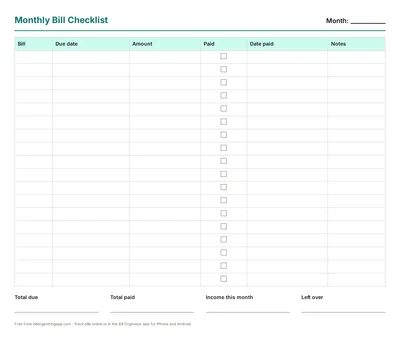
The checklist starts with one question: what's due between today and next payday? Answering it takes a list of every bill with a due date, sorted by date. On paper that's a monthly bill checklist. On a computer, the free online bill tracker sorts bills into overdue, due today, due soon and upcoming and totals what's left this month. On the phone, the bill reminder app does the same and shows the week's bills in a home-screen widget.
Before you pay: the three checks
- Amount. Bills that creep up are the ones people overpay for years. If a bill rose, the bill increase calculator shows what the change costs per year.
- Payee and account. Billers change payment addresses after mergers. A payment sent to an old address can be returned weeks later, after the late fee.
- Funds. Add up everything due before payday, autopays included. If it's more than the balance, use the order in which bills to pay first.
Paying: timing that avoids late fees
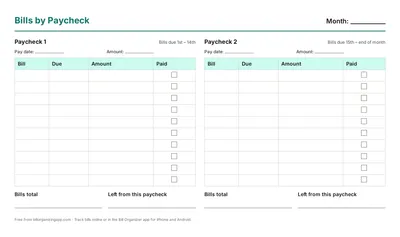
A bill is on time when the biller receives it, not when you send it. Bank bill pay can take up to five business days if it mails a check, so schedule those at least three business days early. Card and utility payments made on the biller's own site usually post the same or next business day. Paying after the due date but within a grace period may avoid a fee and still count as late for the biller's records, so don't rely on grace periods. If one paycheck keeps coming up short, move the due dates to match payday.
After paying: record it
Write the date paid and the confirmation number, then tick the bill off. That record answers "we never received it" in one sentence and helps at tax time for bills like medical costs. In the app, tapping Paid stores the date and moves a repeating bill to next month automatically.
Printable bill payment checklist
Print the monthly checklist for a list with paid boxes and dates, or the by-paycheck sheet if you plan each pay period separately.